Swally and Scran
What we actually eat and drink, and why it tastes the way it does.
A swally is a drink. Scran is food. Between them they cover most of what makes a Scottish kitchen worth sitting in.
Some of this is very old, some of it is a joke that escaped, and one of them is a Mars bar in batter. All of it is real, and all of it has a reason for being the way it is, which is the part I find worth writing down.
And none of it is the shortbread tin version. This is what folk actually ate, which mostly means cheap, plain, and made out of whatever was to hand.
The plates
Stovies
A potato stew, and no two houses make it the same. Potatoes and fat, usually onions, often a bit of leftover meat, all slow stewed in a closed pot until it goes soft and savoury.
To stove means to stew in Scots, from the old French etuve, so stovies are literally stewed potatoes. They turn up in the dictionaries as stovy tatties, stovers and stovocks as well.
The old nicknames told you how the household was doing. Stovies with no meat were barfit, barefoot. Stovies with plenty were high-heelers.
Haggis
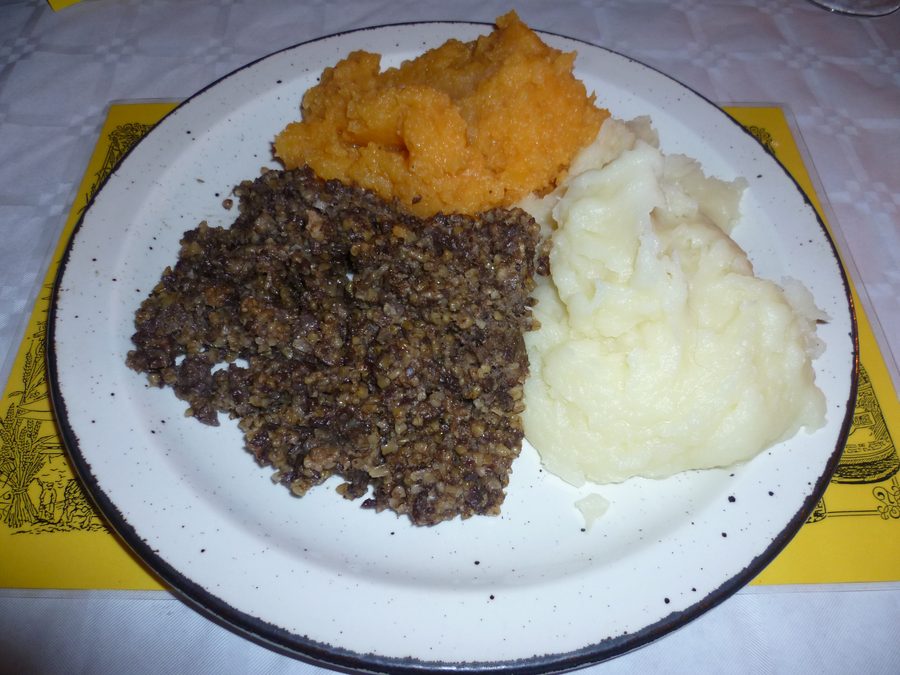
A sheep's pluck, which is the heart, liver and lungs, minced with onion, oatmeal, suet and spice and then boiled. The centrepiece of a Burns supper, served with neeps and tatties and a dram.
The name is old and nobody is certain of it. The earliest written forms are English, from about 1430, and the dictionaries reckon it probably comes from a Scots word for chopping.
You cannot sell haggis in America. A United States rule from 1971 forbids using livestock lungs as human food, and haggis needs the lung, so even haggis made in America breaks it. Scottish butchers tried to get the rule changed before the 2026 World Cup and were turned down.
Cullen skink
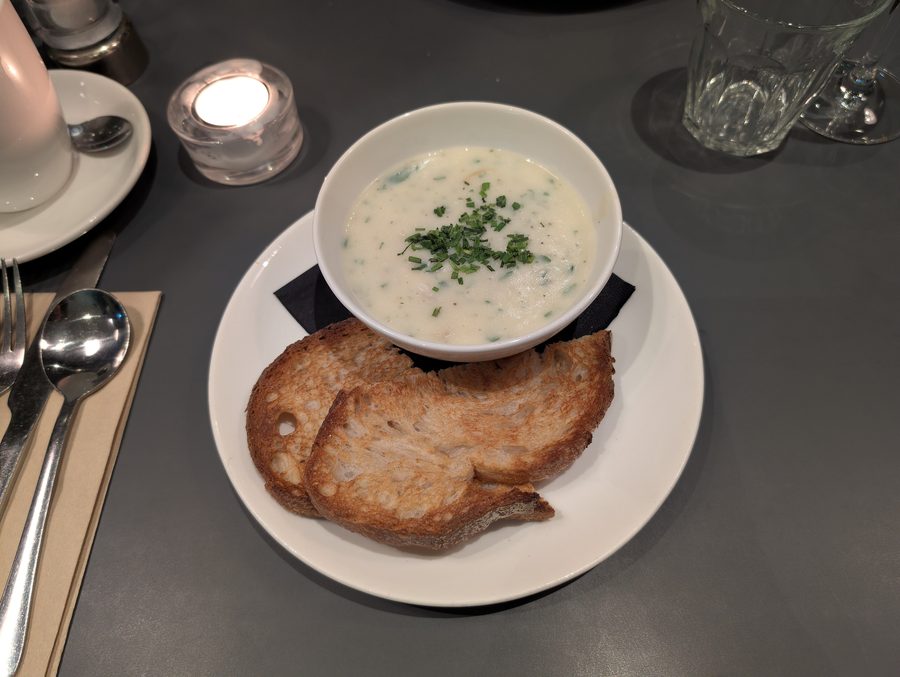
A thick smoked haddock soup with potatoes and onion, closer to a chowder than a broth. A proper one uses finnan haddie, the cold smoked haddock from Findon in the north east.
Cullen is the Moray town it comes from. Skink is an old Scots word for a shin or knuckle of beef, and then for a soup made from one, from the same root as the English shank. The story that it comes from the Gaelic for essence is a folk tale, and the dictionaries do not back it.
Cullen takes its soup seriously enough to hold a world championship, where professional chefs go up against amateurs. In 2024 Kellie Spooner won both the traditional and the with-a-twist titles, only the second person to manage it.
Lorne sausage
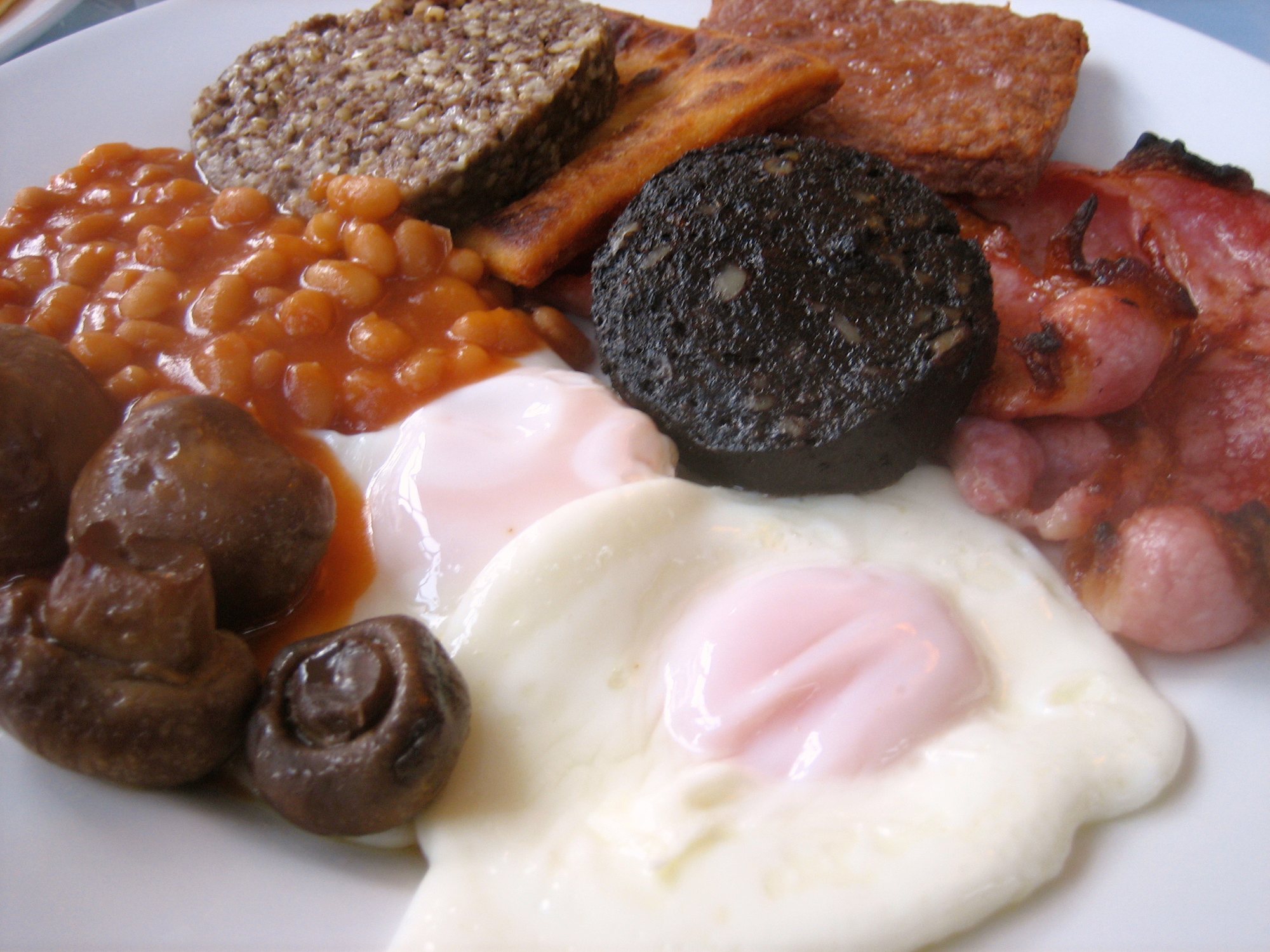
No skin on it. Minced meat, rusk and spice packed into a block and sliced, which is why it is also called square sausage or slice sausage. It belongs on a roll.
Probably named after Lorn in Argyll, though nobody can prove it. Adverts for slice sausage in Greenock go back to 1884, which rules out the popular claim that a comedian called Tommy Lorne invented it, since he was about two at the time.
In 1942 wartime shortages led the Ministry of Food to allow soya flour in place of bread rusk in Lorne sausage, haggis and black pudding, which is one reason old recipes and new ones do not match.
Arbroath smokie
A whole headless haddock, hot smoked over a hardwood fire until it is cooked right through, deep gold outside and creamy inside. Eat it cold, straight off the bone.
The name is protected by law. Arbroath Smokies has protected geographical status, registered in 2004, and to use the name the haddock has to be smoked within about eight kilometres of Arbroath Town House.
Bannocks
A round flatbread, traditionally oatmeal or barley, cooked on a girdle and cut into wedges. Eaten with butter or cheese, with soup, or as part of a breakfast.
There was a bannock for every point in the Gaelic year: St Bride's Day in spring, Bealtaine in summer, Lammas for the harvest and Samhain at the start of winter. The Selkirk bannock, rich and full of raisins, is the one everybody knows.
The sweet things
Tablet
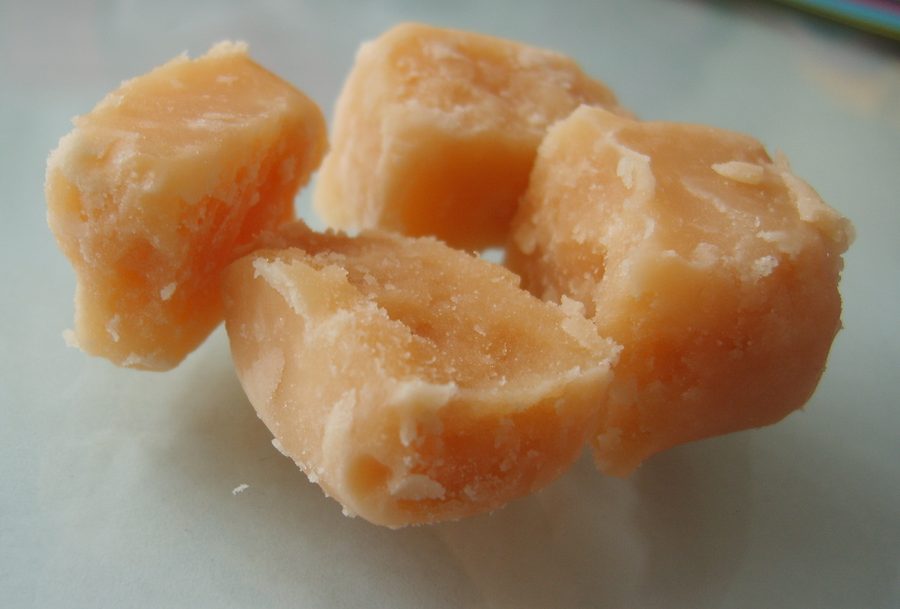
Sugar, condensed milk and butter, boiled and then beaten until it goes grainy, which is the thing that makes it tablet and not fudge. Not quite as hard as a boiled sweet.
It is about three hundred years old. The earliest recorded version, in the household book of Lady Grisell Baillie, was just sugar and cream. The condensed milk came much later, because cream burns when you boil it.
Clootie dumpling
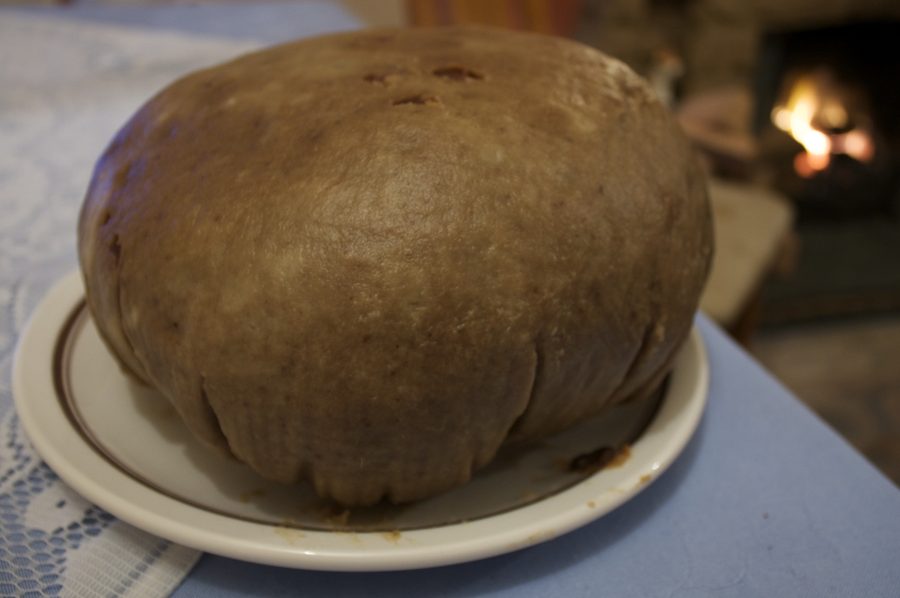
A steamed pudding of flour, breadcrumbs, dried fruit, suet and spice, tied up in a cloth and boiled for hours, then dried off by the fire until it gets its dark skin.
Clootie comes from cloot, the Scots word for a cloth, because that is what you wrap it in to boil it.
A Glasgow chef, Willie McCurrach, holds the record for the biggest one ever made at 650 pounds, and it was piped through the streets of Glasgow on the back of a lowrider.
Cranachan
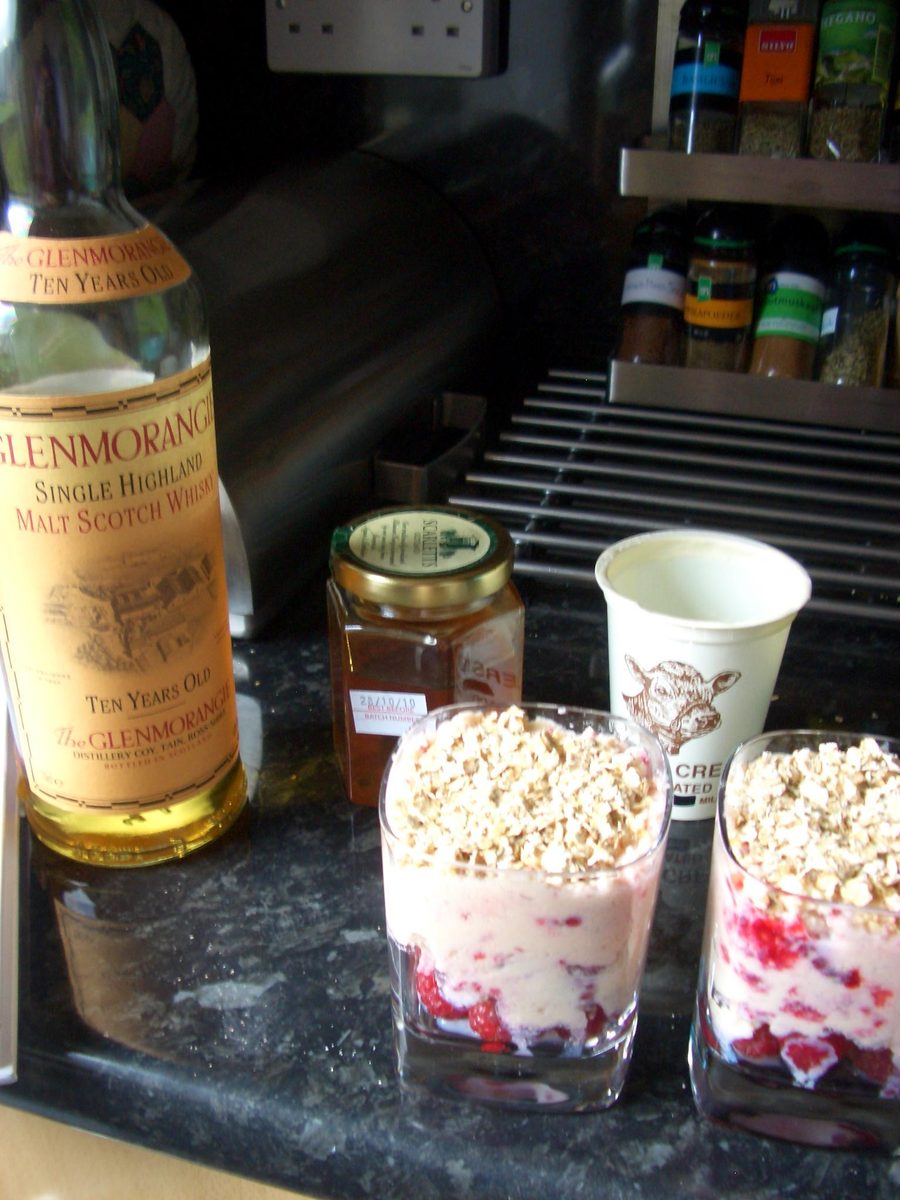
Cream whipped with honey and whisky, folded through toasted oatmeal and layered with raspberries. It was a breakfast before it was a pudding.
From the Gaelic crannachan, which the dictionaries give as a kind of churn, and record as a Halloween dish of half churned cream. Which fits, because that is what you are doing when you whip it by hand.
It grew out of cream crowdie, a breakfast of cheese, oatmeal, cream and honey, and it was originally a harvest celebration, eaten once the raspberries came in.
Dundee cake
A rich fruit cake, round, with sultanas, orange peel and rings of blanched almonds on the top. An afternoon cake rather than a Christmas one.
Dundee tried to get the name protected by law and failed. The application was turned down on the grounds that Dundee cake is a generic name now, so any baker anywhere is free to use it.
Tunnock's teacake
Shortbread, a dome of soft meringue, and a full coating of chocolate, made in Uddingston by the same family firm Thomas Tunnock started in 1890. Boyd Tunnock came up with the teacake itself in 1956.
It has become a national symbol whether the firm asked for it or not. Dancers dressed as teacakes opened the 2014 Commonwealth Games in Glasgow, and sales at Waitrose went up 62 per cent the next day.
The deep fried Mars bar
A chilled Mars bar, battered and dropped in the fryer. The batter goes crisp and the middle goes to molten sugar.
It is real, but it is a joke and a story in the papers rather than something anybody eats often, and it is not Scotland's national dish. It started in Stonehaven around 1992, and a Dundee survey in 2004 found that fewer than a quarter of the chip shops who replied sold them, at about 23 a week.
Scotch is not a style of whisky. It is a place, with rules attached.
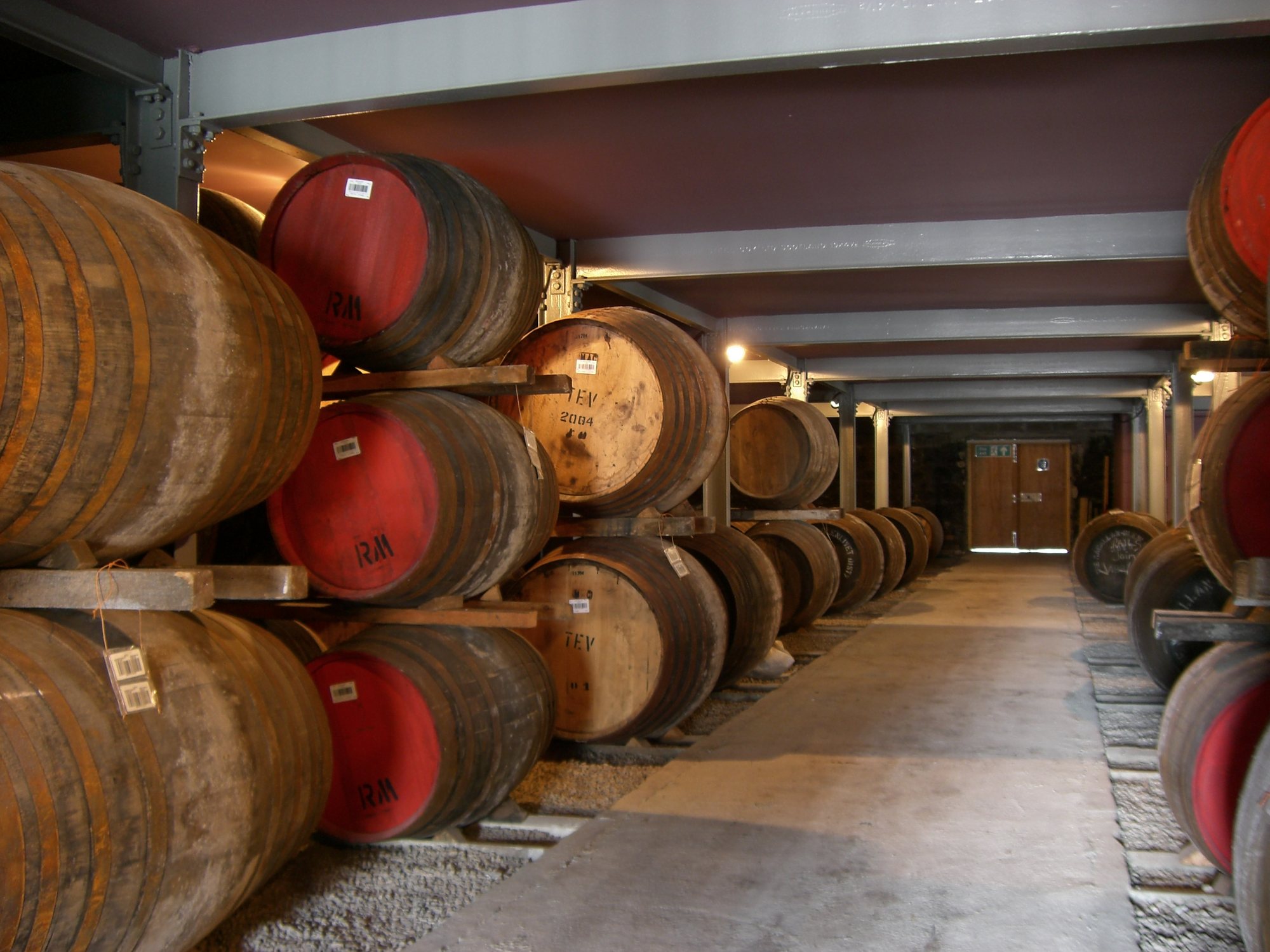
To be called Scotch it has to be distilled in Scotland, from water and malted barley, with only whole grains of other cereals added. The mashing, the conversion and the fermentation all happen at the one distillery. It is distilled to less than 94.8 per cent, matured in oak casks no bigger than 700 litres, in Scotland, for at least three years, and held in an excise warehouse. It has to keep the colour, aroma and taste it got from how it was made and how long it lay in the wood. And it is bottled at 40 per cent or more.
Nothing is added to it but water and, in some bottlings, plain caramel colouring, which is the only colouring the law allows and is used mostly to keep big blended batches looking the same from one bottling run to the next. The colour in the glass comes from the cask: the wood, whatever was in that wood before, and the years. Pale gold out of an ex-bourbon cask, deep russet out of a sherry one.
Inside that one law sit five kinds of whisky: single malt, single grain, blended malt, blended grain, and blended Scotch. Most of what the world drinks is blended.
The smoke and the peat
Wet grain has to be dried
Barley has to be soaked and allowed to start sprouting before it can be mashed, and wet grain has to be dried before it will keep. That drying happens in a kiln.
The smoke goes through the grain
If the kiln is heated by burning peat, the smoke passes up through the barley and the grain takes it in. Nothing is added later. The smoke goes in at the kiln or it does not go in at all.
What peat actually is
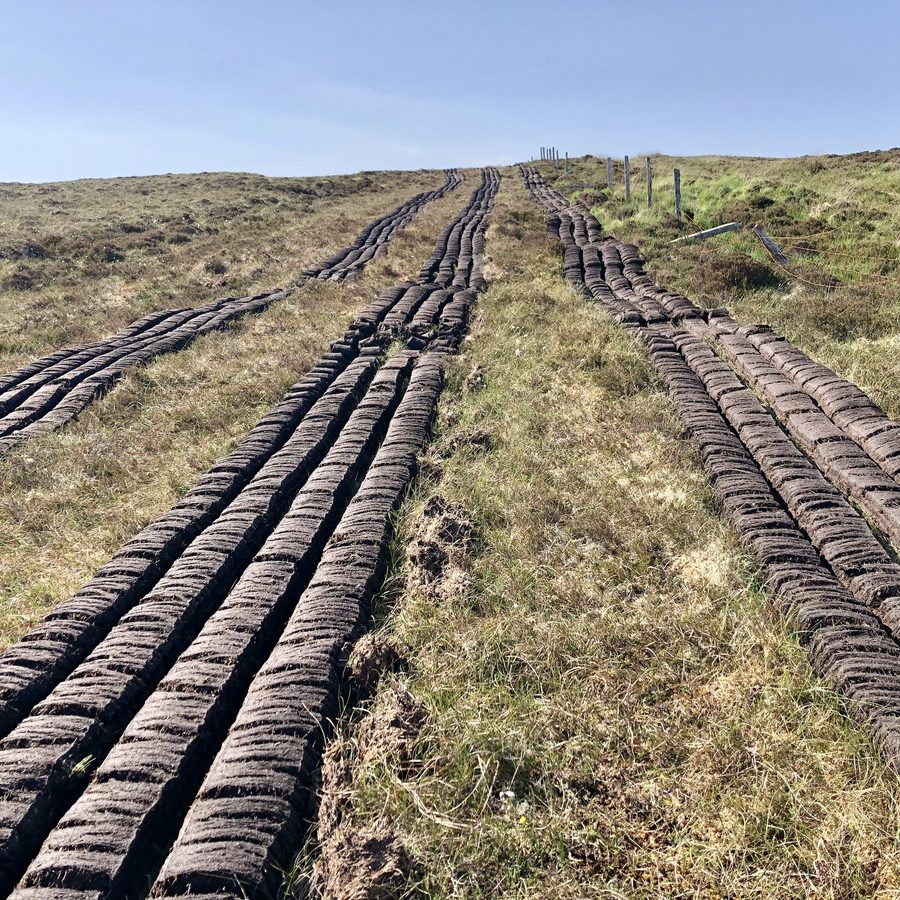
Half rotted moss, grass and roots dug out of a bog. Burning it gives off phenolic compounds, and it is those the barley absorbs. That is where the ash, iodine and brine notes in a peated malt come from.
Why only some of them do it
Mostly history. Peat was once the only fuel anybody had, so at first every Scotch was smoky. When the railways came and coal got cheap, most places stopped burning it, and that is how the first unpeated whiskies appeared. Islay and the north carried on, out of habit, and then as a badge.
How smoky is smoky
It is measured as parts per million of phenols in the malt. Under about 15 is lightly peated, around 20 is medium, over 30 is heavily peated. The number drops during distillation and again in the cask.
It does not get smokier with age
The opposite. The phenols settle in with everything else and round off, so a young peated malt has the sharper, brasher smoke and an old one is deeper and calmer.
What people mean when they say it
Peaty, smoky
The fire family. The smell and taste of the smoke that dried the barley, described in the trade as running from wood smoke through to tar, iodine and carbolic. This is what people mean when they say an Islay malt.
Salty, maritime
A sea air tang, sometimes just called brine. You find it in coastal malts, and the distilleries there put it on their own tasting notes.
Honeyed
Sweetness that smells of honey and blossom rather than of sugar. A Speyside and Lowland thing, and usually a gentle dram.
Sherried
Not sherry poured in, which is not allowed. It means the cask held sherry before it held whisky, so the wood soaked up wine and gives some of it back as dried fruit and spice.
Light, floral
Leafy, grassy, hay. Often a Lowland malt, and often made by the still rather than the malt, because a taller still tends to give a lighter spirit.
Spicy
Warmth in the pepper, ginger and cinnamon line. Turns up in the same places as the honey, usually behind it.
The five regions
Speyside
The most densely populated whisky region in the world. Frugal with peat and full of fruit: apple, pear, honey, vanilla, spice.
Lowland
Everything south of a line between Dundee and Greenock. Soft and gentle, grass and honeysuckle and cream, and a good one to start an evening on.
Highland
The biggest region by a mile, and it takes in the islands, so it holds the whole spread, from something light to a salty coastal malt.
Campbeltown
Once home to more than thirty distilleries, now one of the smallest regions. Rich and robust, with salt, smoke, fruit, vanilla and toffee.
Islay
Pronounced eye-luh. A small island where most of the population has something to do with whisky, and where the heavily peated, fiery malt comes from.
Treat all of that as a tendency and not a promise. The trade body itself says the shape of the still and the age of the cask matter every bit as much as where it was made, so a region famous for smoke can still turn out something soft and sweet.
A few facts worth knowing
- 156 operating Scotch whisky distilleries, as at September 2026. The trade body also says over 150, which is the safer way to put it.
- 22 million casks are lying in warehouses in Scotland, which is about 12 billion bottles' worth.
- 43 bottles of Scotch left Scotland every second during 2025, to more than 160 markets.
- £5.36 billion of Scotch was exported in 2025, which was 72 per cent of all Scottish food and drink exports.
- Laid end to end, the bottles shipped in one year would stretch about 467,000 kilometres, which is more than eleven times round the Earth.
- 2.7 million visits were made to Scotch whisky distilleries in 2024.
Whisky or whiskey?
Whisky in Scotland. Whiskey in Ireland, and in America. It is the same drink, and neither spelling is wrong.
Both words come from the Gaelic uisge beatha, the water of life. For a long time everybody left the e out, in both countries. Then Irish distillers, who had the expensive end of the market, got badly upset about cheap blended Scotch turning up on their patch, and several of them brought back the older spelling with the e to mark themselves out. One Dublin firm advertised that the E stood for Excellence. The spelling went to America with Irish emigrants and it stuck.
In the law that creates the protected name it is whisky all the way through, and the word whiskey does not appear in it at all.
The things people get wrong
Islands is not a region. The trade body is blunt about it: Islands is not a Scottish regional name, and it cannot be put on a label.
Whisky does not age in the bottle. A twelve year old left in a cupboard for another thirty years is still a twelve year old whisky.
Colour tells you very little. It comes from the cask and the years, not the calendar in the way people assume. A dark dram is not automatically an old one, and the only thing a bottler is allowed to add is plain caramel colouring, which evens out the look of big batches rather than ageing anything.
Single malt does not mean one cask or one year. It means one distillery, malted barley only, and pot stills.
Scotch does not have to be made from Scottish barley. The law sets no origin for the grain at all, even though most of it is bought here.
Not all Scotch is smoky. Most of it has no peat in it whatsoever. The fire is a choice, not a rule.
And a word like honeyed or maritime on a bottle is a description of how it tastes, not a promise about where it came from.